 Virtual Campus
Section outline
-
-
OVERVIEW OF THE MODULE 7

Scientific advances and technological change are important drivers of economic performance of a country. The ability to create, distribute and exploit knowledge has become a major source of competitive advantage, wealth creation and improvements in the quality of life. Some of the main features of this transformation are the growing impact of information and communications technologies (ICT) on the economy and on society; the rapid application of recent scientific advances in new products and processes; a high rate of innovation across countries; a shift to more knowledge-intensive industries and services; and rising skill requirements.
These changes imply that science, technology and innovation are now key to improving economic performance and social well-being. However, for the country to obtain the benefits from this transformation, attention ought to be given to education so that conducive environment for development of ST&1 .
-
Unit 7.1: Introduction to Science, Technology and Innovation

Introduction
Science technology and innovation are recognized as the key to social progress and are essential common for sustainable development, economic development, poverty eradication, educational system and many more. Investment in science, technology and innovation (STI) is essential for economic development and social progress. Scientific advances and technological change are important drivers of recent economic performance. These changes imply that science, technology and innovation are now key to improving economic performance and social well-being. This unit aims to help you understand what Science, Technology and Innovation (ST&I) is all about. We shall look at the meaning, historical background, ST&I capabilities and its importance in relation to environment and resource management and the relationship between ICT and ST&I.
-
-
-
Unit 7.2: Legal, Policy and Institutional Framework for Science, Technology and Innovation
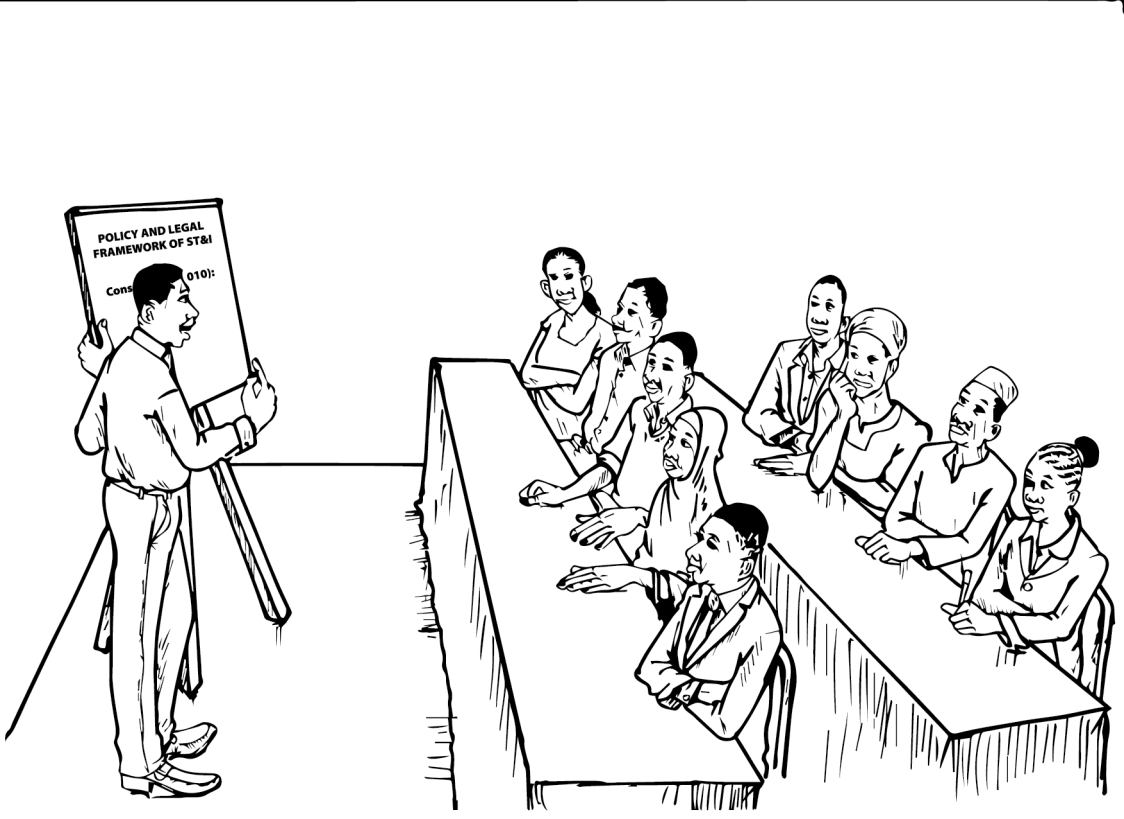
In this unit, we examine the policy, legal and Institutional framework of ST&I in Kenya. The unit will explore the policy and legal instruments guiding ST&I, curriculum reforms in relation to ST&I, and institutions that manage the ST&I sector. Finally, the unit will introduce you to the Institutional ST&I policy so that you can understand how to develop one for your institution.
The National Commission for Science, Technology, and Innovation (NACOSTI) is one of the arms of the ST&I sector and it exists to regulate and assure quality in the S T & I sector as well as act as an adviser to the government in matters thereto. The Kenya National Innovation Agency (KENIA) exists to develop and manage the national innovation system while the National Research Fund (NRF) exists to facilitate research for the advancement of science. These were some of the key highlights of Kenya’s ST&I policy environment of NACOSTI.
The National Commission of Science and Technology is charged with the responsibility of overseeing the processes of ST&I policy formulation and implementation. The development of the new ST&I policy entrenched in Vision 2030 sought to connect the variety of entities and their activities towards a more coordinated approach with more defined mechanisms for mobilizing human, financial and Institutional resources. -
-
-
-
Unit 7.3: STEM Education
Introduction
The adoption and utilization of Science, Innovation and Technology (ST&I) depends heavily on the foundation laid as young people go through the education system. The teaching of subjects aimed at preparing learners for ST&I required a curriculum that deliberately incorporates the teaching of ST&I-related subjects.
In this unit, we will learn about Science, Technology, Engineering and Mathematics (STEM) Education. We will seek to understand the concept of STEM education and its importance in the promotion of ST&I. We will also learn about the theoretical framework for STEM education, the learning approach in STEM education and STEM teaching and learning methods. We will also look at STEM model schools in Kenya and issues concerning STEM education.
-
-
-
-
Unit 7.4: Instructional Approaches that promote Science, Technology and Innovations

Introduction
As you might be aware, different instructional approaches can translate into preferred methods of instruction. An instructional method can be defined as the process by which instruction occurs, whether it is a lecture, class discussion, small group discussion, simulation, inquiry-based learning, or individual project. In this unit, we shall deal only with instructional approaches that involve the learners and engage their critical thinking faculties as well as improve their skills and attitudes towards science, technology and innovation.
The terminologies used vary markedly but sometimes overlap in practice; hence terminologies like active learning and experiential or participatory approaches are used within the same context. It could also involve the use of a multiplicity of sensory perceptions by the learner thus provoking stimulus variation. More critically, the learning approaches should stimulate curiosity that leads to problem-solving.
-
-
-
Unit 7.5. Innovation Development, Transfer and Diffusion

Introduction
Leaders in institutions of learning have the responsibility of creating a climate of creativity and innovation in their contexts. In Kenya, the curriculum driving teaching and learning is competence-based and it embraces science technology and innovation. Competency-Based Curriculum (CBC) deliberately embraces problem-solving, digital literacy, creative thinking and innovation as key competencies to be developed throughout the learning cycle among others. Learning environments that embrace these competencies are transformative. This transformation does not come to institutions of learning by accident or coincidence. They must be planned. Institutions must develop their capacity to innovate.
In this unit, we will explore what innovations are, the characteristics of innovations, and how they are developed, transferred and implemented. We will also learn about practices that promote creativity and innovation and examine innovative initiatives that can be emulated -
-
-
-
Unit 7.6: Technical and Vocational Education and Training(TVET)
Introduction
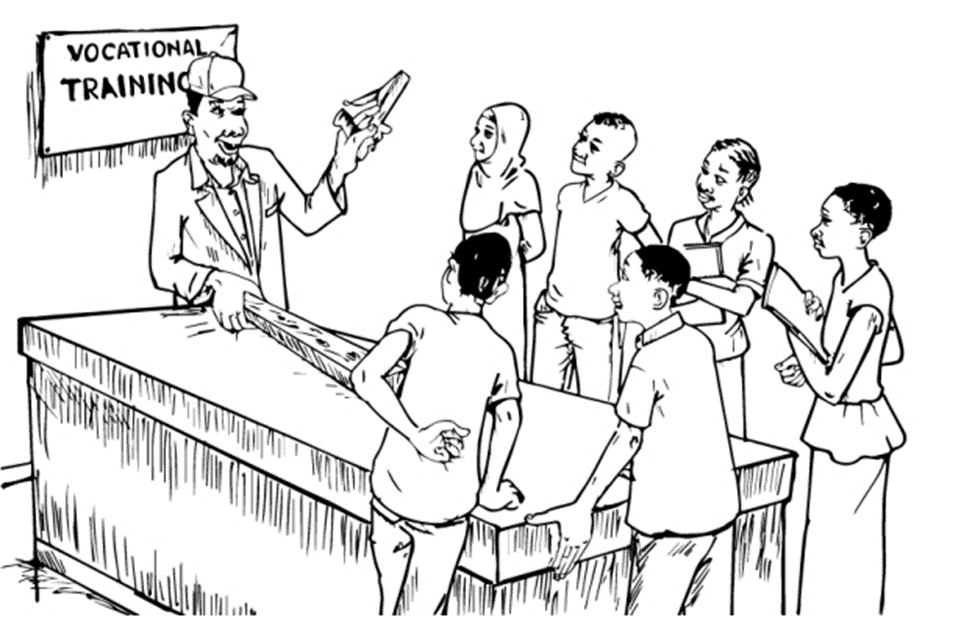
Technical and vocational education and training (TVET) are steadily gaining popularity in the global debates and government priorities for education and national development agendas. The government of Kenya is committed to revamping the education system with a view to making the lives of the youth better. Technical Vocational Education and Training (TVET) play important roles in implementing and promoting sustainable development. TVET institutions are major suppliers of workforce who will be at the forefront in dealing directly with sustainable issues. The TVET ACT 2013 was designed to address the job skills issue to ensure an increased and sustained enrolment ratio of 20% by the year 2030. TVET sub-sector in Kenya continues to produce the needed middle-level human resource for the national economy.
Vision 2030 has placed special demands on TVET as the leading engine that the economy must essentially rely upon to produce adequate levels of middle-level manpower that will be needed to drive the economy towards the attainment of the vision. Education managers play a key role in promoting the TVET agenda. To perform this role, they must understand the key issues and challenges in the TVET sector.
-
-
-
-
Unit 7.7: Resource Mobilization and Ulitzation for Promotion of ST&I
Introduction
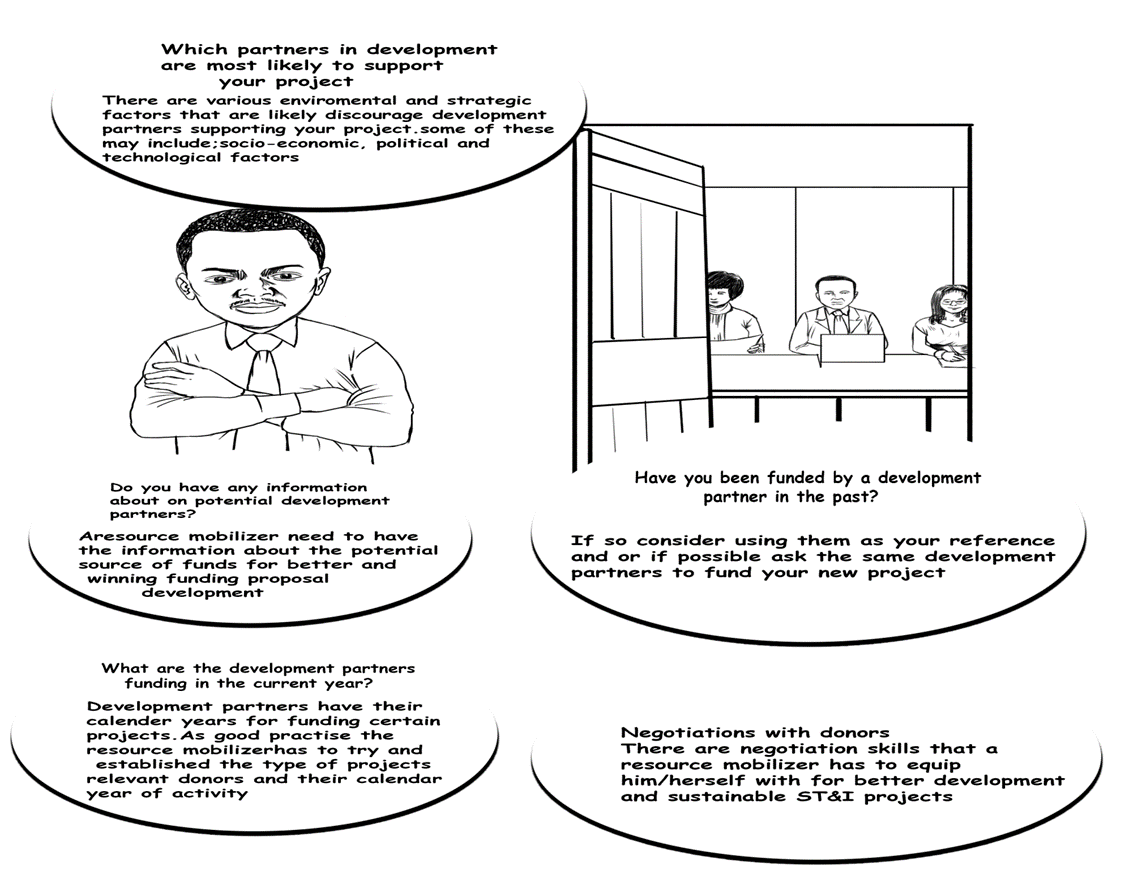
In this unit, we shall equip you with knowledge, skills and attitudes for resource mobilization and effective utilization for the promotion of S T & I. Institutional leaders need to have adequate skills for resource mobilization and utilization because they require resources for interventions aimed at achieving their set objectives and goals. Resource mobilization and utilization is a process that entails: Identification of the need; Rationale for resource mobilization and utilization; assessment of alternative sources; identification of essential components of a funding winning proposal; and identification of challenges that face resource mobilization and its utilization.
-
-
-
-
-