 Virtual Campus
Section outline
-
-
UNIT 6.1: INTRODUCTION TO LEADERSHIP IN CURRICULUM DELIVERY
Welcome to unit 1 where we will seek to understand the concept of curriculum,. We will learn that the curriculum is dynamic and it changes from time to time, We will also go through various curriculum reforms in Kenya since independence. We will seek to understand more about the most recent curriculum reforms i.e. the Basic Education Curriculum Framework. (BECF),. In addition, we will look at the components of the curriculum and virions professional tools or documents that are essential for effective curriculum delivery. To end the Unit, we shall examine some the pertinent Abd contempered issues that affect curriculum implementation and management
-
-
-
-
UNIT 6.2: CURRICLUM DEVELOPMENT
 In this unit, we will discuss curriculum development which is the multi-step process of creating and improving a course taught at a school. Ideally, the curriculum development process should be one of continuous improvement rather than a linear or stagnant approach. Plans for instruction should be frequently reviewed, revised, and updated as new and different needs arise. Change may be required due to subject-area discoveries, innovations in instructional best practices, or shifts in course.In this unit we will look at curriculum development, factors that influence curriculum development, principles of curriculum design, models of curriculum design, curriculum designs and interpretation of curriculum designs.
-
-
-
-
UNIT 6.3: CURRICULUM IMPLEMENTATION
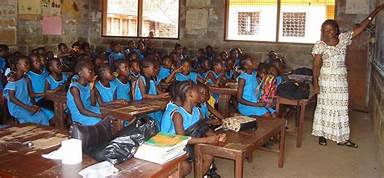
Welcome to unit three where we shall be looking at curriculum implementation. We will examine the Concept of curriculum implementation, and requirements for curriculum implementation. In addition, we will look at process performance measures, Community Service Learning and Learning Support Program
-
-
-
-
UNIT 6.4: CURRICULUM CHANGE AND INNOVATION
In this unit we will look at the concept of the Curriculum change as aligned to global and societal dynamic changes. We shall look at major curriculum reform which is aligned with the Constitution 2010 and Vision 2030, holistic development of learners, recognition of the shift to Competency Based Curriculum (CBC) . We will look at the major changes that have been introduced to education by CBC. Its also important that we look at some of the innovative instructional approaches that are used to to improve quality and relevance of education.
-
-
-
-
UNIT 6.5: CURRICULUM ASSESSMENT
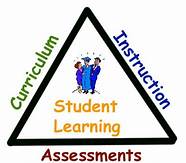
In this unit we will look at curriculum evaluation. The curriculum development process cannot be complete without curriculum evaluation. Its for this reason that we are going to examine the curriculum evaluation in details, We will learn about Competency Based Assessment Framework (CBAF). In addition, we will look at Competency Based Assessment (CBA) tools and assessment of core competencies and core values, We will end the Unit by looking at assessment and reporting of learner’s performance.
-
-
-
-
UNIT 6.6: INTERNAL QUALITY ASSURANCE IN SCHOOLS
 Curriculum development requires to be checked regularly to ensure that the inputs, processed and outputs meet the set standards. control. In this unit, we shall look at the concept of quality assurance and standards. We shall examine the policy, legal and ethical issues in quality assurance and standards. We shall also look at quality index or guidelines for quality and assurance and standards assessment. In addition, we shall look at the importance of teacher professional development.
-
-
-
-
UNIT 6.7: SPECIAL NEEDS EDUCATION
 According to Kenya Constitution, 2010, education should meet the needs of all learners and there should be no form of discrimination. In this unit we will look how education can be made inclusive to that it can cater for all learners including those with special needs. We shall examine the concept of special needs education and needs assessment for special needs. In addition, we will look at how the Basic Education Curriculum Framework (BECF)cater for SNE and transition from one level to the another. We shall also look at barriers facing learners with special needs. In addition we shall look at skills required for working with learners with special needs and support services from such learners.
-
-
-